
€22.00/ month
To congstarTransparency

HomeInternet typesMobile internet
If you need internet at home but cannot or do not want to rely on a fixed line, mobile internet in Germany may be a practical alternative. A mobile-home router receives a cellular signal and creates Wi-Fi for your devices. Setup can be simpler than installing DSL, cable or fibre, but performance depends on reception at your exact address. Data limits also make these plans different from many fixed home connections.
Showing 6 of 6 plans · Prices last checked 2 October 2026
€22.00/ month
To congstar50 Mbps · 25 up · 100 GB · Flexible · setup €35.00
More about congstar€22.00/ month
To congstar€32.00/ month
To congstar50 Mbps · 25 up · 200 GB · Flexible · setup €35.00
More about congstar€32.00/ month
To congstar€42.00/ month
To congstar50 Mbps · 25 up · 400 GB · Flexible · setup €35.00
More about congstar€42.00/ month
To congstarMobile internet sends data through a mobile network rather than a telephone, cable or fibre line. For home use, a compatible router receives that signal and distributes the connection over Wi-Fi or, depending on the router, a network cable.
The main practical advantage is that you do not need an active fixed-line socket. Mobile home internet in Germany can therefore suit temporary accommodation, properties awaiting a fixed connection or households with limited fixed-line choices.
The trade-off is less predictable performance. Walls, router position, local network demand and the signal reaching your building can affect the connection. Mobile-home plans may also have a monthly data allowance, while fixed home packages often suit sustained household use better. Availability always depends on the exact address.
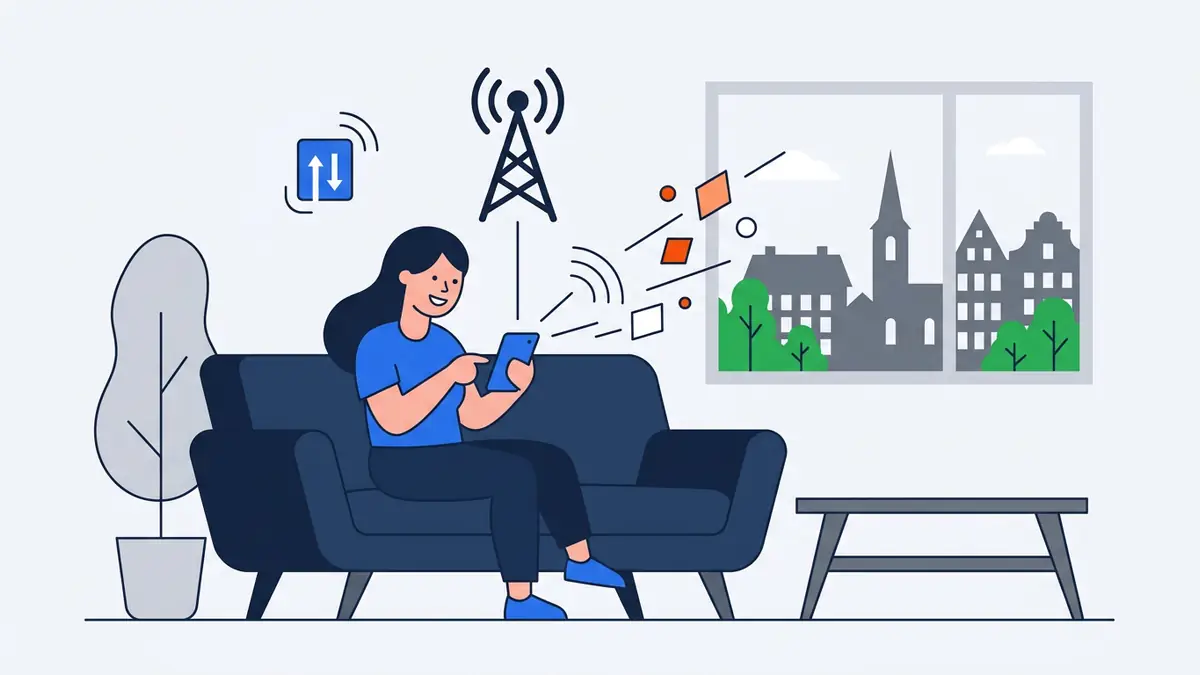
A data allowance measures everything downloaded and uploaded during the billing period. Video streaming, cloud backups, software downloads, video calls and game updates can use substantially more data than messaging or ordinary browsing.
Before choosing 100 GB, 200 GB or 400 GB, consider how many people and devices will share the connection. A single light user has different requirements from a household streaming on several screens or working from home every day.
Check how the provider treats usage after the allowance is reached and whether you can monitor consumption. Do not assess a plan by speed alone: an adequate monthly allowance is just as important for reliable household use.
A mobile-home plan is not the same as an ordinary phone SIM. It is intended to provide internet to household devices through a router. A prepaid or postpaid SIM is generally selected for a phone, tablet or personal hotspot, with its own allowance, term and usage conditions.
Prepaid service lets you add credit without a long commitment. Postpaid service bills you according to a recurring contract. Neither label tells you the speed, allowance or network quality at your address.
If you need SIM internet in Germany for personal devices rather than a household router, see our internet SIM card guide. You can also explore internet without a long contract.
A plan being advertised nationally does not mean it will perform equally at every property. Complete the provider’s address check using the exact home where you intend to use the service. Building materials, surrounding structures and the router’s position can all influence indoor reception.
Place the router where it receives a stable signal while still providing useful Wi-Fi coverage. A position near a window may help in some homes, but you should test several locations rather than assume one is best. Our Wi-Fi guide for Germany explains the difference between the incoming connection and Wi-Fi inside your home.
Confirm that the router is compatible with the chosen plan and check whether it is supplied, rented or bought separately. Advertised figures are not a guarantee of performance at your address; see our internet speed guide for context.
Compare the full household requirement before choosing mobile internet. Consider the monthly allowance, contract term, activation fee, router arrangement, reception and whether you need a landline. For a fixed connection, compare the installation process and available technology at the same address.
DSL internet uses the telephone network, cable internet uses a cable connection, and fibre internet uses optical fibre. Their availability varies by building. You can also read more about 5G home internet in Germany.
Use our German home internet comparison to weigh mobile and fixed options. Always complete the provider’s final address check before treating a plan as available.
Confirm the live offer at your address.
No. Both use a mobile network, but a mobile-home product is designed to connect household devices through a router. A phone SIM is normally intended for a phone, tablet or personal hotspot. Contract terms, data allowances and permitted use can differ, so check the provider’s conditions rather than assuming the products are interchangeable.
It can replace a fixed connection for some households, particularly when reception is good and monthly data use fits the plan’s allowance. A fixed line may be more suitable for sustained heavy use or several demanding users. Compare data limits, reception, contract terms and router arrangements before deciding.
The reviewed congstar Homespot & Go plans are not unlimited. The available plan variants have monthly allowances of 100 GB, 200 GB or 400 GB. Consider your household’s streaming, working, gaming and download habits before choosing. You should also check directly with the provider what happens after the allowance is reached.
Yes. Each reviewed congstar Homespot & Go allowance has a flexible version as well as a 24-month version. The flexible S, M and L plans have a €35 activation fee, compared with €15 for the 24-month versions. Check the provider’s contractual terms and cancellation rules before ordering.
Mobile reception varies between streets, buildings and even rooms. Walls, neighbouring structures, router placement and demand on the local network can affect performance. An address check helps establish whether the provider offers the plan at your property, although it cannot guarantee identical reception throughout the home.